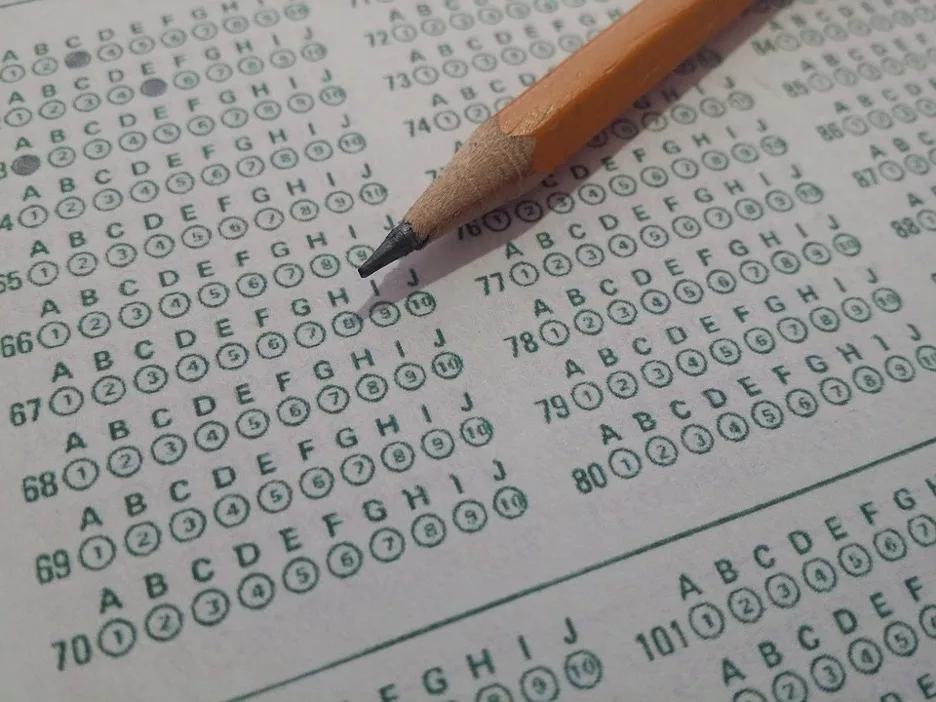
Anyone who has been to a traditional school knows what the morning of a big test feels like.
The environment is designed around suspicion. You cannot bring notes or ask questions; you cannot take too much time, go for a walk, or think out loud. No distractions please; eyes on your own paper.
And all of it rides on how the child happens to show up that day. Perhaps she slept poorly last night or didn’t eat that morning; perhaps it’s her birthday and her mind is somewhere else entirely.
Sure, some children thrive under that kind of pressure. But there’s also the problem of cost — all the time and energy and anxiety spent preparing for a single event rather than on learning itself.
Schools test children anyway. Teachers and parents need to know where children are, and tests give parents and educators very useful information, data that is necessary to ensure that children are actually learning. A classroom without any form of assessment is one where a children can fall behind quietly while no one notices. Gaps that open early become much harder to close later.
So the question is not whether to assess; it’s how.
continuous assessments
Continuous assessment takes what is useful about testing and removes what is harmful. Rather than measuring a child at a single point in time under artificial pressure, it builds a picture through daily observation, documentation, and direct interaction.
At Hypha, we assess continuously and document rigorously. Each child’s learning criteria is specific and well-defined, with clear benchmarks for each subject. During English and Mathematics, the class works in small groups based on each child’s level. Teachers know exactly what each child knows because they work with them directly, not from reading a score. They observe children in their projects and answering questions one-on-one, and they assess their understanding every day.
But the most important reason is responsiveness. A test result might arrive weeks after the learning happened. By then, a gap has widened and the moment to catch it has passed. When a teacher assesses daily, she can change course tomorrow. She notices that a child didn’t grasp long division on Tuesday and adjusts Wednesday’s lesson before the gap has time to grow.
At the end of each term, parents receive a detailed written report covering every subject. Each subject is evaluated against more than a dozen specific objectives. Every educator — not just the class teacher — contributes a personal paragraph describing your child as a learner. It is the most thorough account most parents have ever received of their child’s education, and it’s possible because of the way we continuously assess and document every child throughout the term.
A test tells you where a child was on one particular morning. We prefer to know where they are every day.